

Compare complete ownership costs at the same storage capacity, not a phone's headline price against another phone's monthly payment. For the 256GB models, Apple's U.S. prices checked on October 26, 2026, start at 1,299 for iPhone 18 Pro Max, before tax and optional extras.
That is a $700 hardware difference before you add a case, protection plan, charging equipment, or changes to service. It is the starting point, not the final answer.
I would build the comparison in cash-price terms first, then separately examine how you intend to pay. This is a budgeting framework, not a personalized financing recommendation.
ON THIS PAGE
Start with an equal comparison
Add only the extras you need
Keep protection and repair separate
Calculate a realistic example
Do not confuse a payment with the cost
Start with an equal comparison
Choose the same capacity for both phones. A 256GB Duo against a higher-capacity Pro Max answers a different question from a like-for-like comparison.
Then choose the same purchase basis: full retail before trade-in, or the final checkout price under clearly identified conditions. Do not compare an unlocked-style cash listing with a promotion requiring a particular carrier plan without accounting for that requirement.
Starting item | iPhone Duo | iPhone 18 Pro Max |
|---|---|---|
Capacity in this comparison | 256GB | 256GB |
U.S. hardware price checked October 26, 2026 | $1,999 | $1,299 |
Tax | Depends on checkout location | Depends on checkout location |
Trade-in credit | Not assumed | Not assumed |
Protection and accessories | Added separately | Added separately |
Prices can change. Keep the check date attached to the calculation and verify the chosen configuration at checkout.
A color or capacity change should not quietly enter the comparison halfway through. Record the exact configuration before considering discounts.
Add only the extras you need
Start by inspecting what you already own. A compatible cable, suitable adapter, and supported desk charger may be reusable. A case is a more model-specific question.
For Duo, investigate the complete case and magnetic accessory combination. For Pro Max, verify exact size and control openings. Do not apply one accessory budget to both devices just to make the table symmetrical.
Separate required purchases from preferences. A replacement cable needed to connect your charger is a different expense from a decorative stand you would enjoy owning.
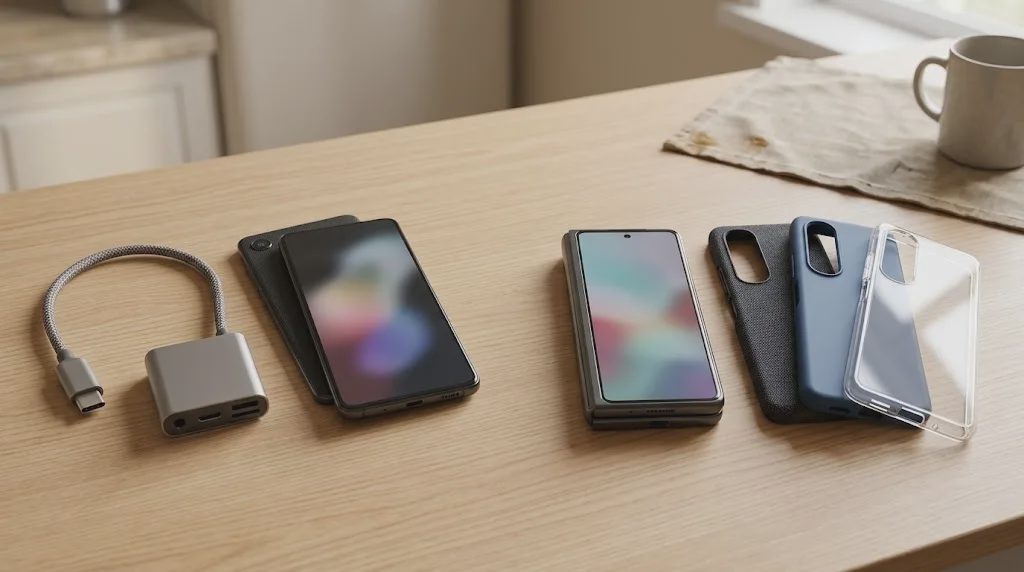
I would create three columns in a private shopping note: already owned and verified, necessary purchase, optional purchase. That prevents a phone upgrade from becoming an unexamined replacement of everything on the desk.
If a retailer sells a bundle, compare its components against that list. A discount on unnecessary accessories is still additional spending.
Keep protection and repair separate
A protection plan has a premium and terms. A repair has a possible future charge. They are not interchangeable numbers.
For any plan, check the exact phone, coverage period, covered events, service fees, exclusions, cancellation terms, and whether theft-and-loss protection is included. Use the current U.S. terms rather than a fee copied from a different market.
If you pay monthly, total the first twelve payments for a first-year budget. If you pay for a longer period upfront, show the actual first-year cash outlay and the coverage duration instead of quietly dividing it into a different figure.
I would not add a hypothetical repair to every buyer's total as though the accident is certain. Equally, a plan premium does not mean every later claim costs nothing.
Keep a separate emergency-service allowance if that helps your budget. Label it as money reserved, not money inevitably spent.
Service changes can outweigh an accessory
If your existing mobile plan remains unchanged, its full cost does not create a difference between these two phones. You can include it in a complete household budget without pretending it favors one device.
If a promotion requires moving to a more expensive plan, calculate the increase over the same period as the credits. A 240 over twelve months before tax or fees; that is illustrative arithmetic, not a current carrier offer.
Apply the same logic to cloud storage and subscriptions. Charge only the change caused by your decision in an incremental comparison. Do not automatically assign a new subscription to Duo because it has a bigger display.
Check whether an attractive app or accessory introduces its own recurring fee. The purchase page and the service agreement may be separate.
Calculate a realistic example
The following example uses the checked phone prices but invented planning allowances, not quoted accessory or insurance prices. Replace every allowance with your actual choice.
Item | Duo example | Pro Max example |
|---|---|---|
Phone, 256GB | $1,999 | $1,299 |
Case allowance | $60 | $40 |
Additional charging allowance | $0 | $0 |
Optional coverage allowance, twelve months | $180 | $180 |
Total before tax and service changes | $2,239 | $1,519 |
The example gap is 180.
This is useful because it exposes the decisions. Reuse a verified charger and that line remains zero. Choose a different case and the difference changes. Decline optional coverage and remove its allowance while retaining the risk decision.

Do not confuse a payment with the cost
A monthly advertisement needs context: term, down payment, taxes, trade-in, required plan, interest where applicable, and any final ownership or return condition.
A lease and an installment purchase can have different outcomes after twelve months. Do not label both “owning the phone for a year” without explaining what remains owed or whether the device must be returned.
For a full-price comparison, keep the purchase total visible. For cash flow, show what actually leaves your account in year one and separately list remaining obligations.
Trade-in credits also deserve their own row. They depend on the submitted device and terms, and the old phone is an asset you are giving up rather than free money appearing in the budget.
Is Duo always $700 more expensive overall?
No. That is the checked 256GB hardware gap. Taxes, accessories, coverage, and purchase conditions can change the total difference.
Should a carrier promotion decide the model for me?
Only after its full conditions fit your needs. Compare the required plan and credit period, not the largest advertised saving.
My decision would come down to whether Duo's daily use justifies the complete extra cost. Calculate that cost before asking whether the fold feels worth it.