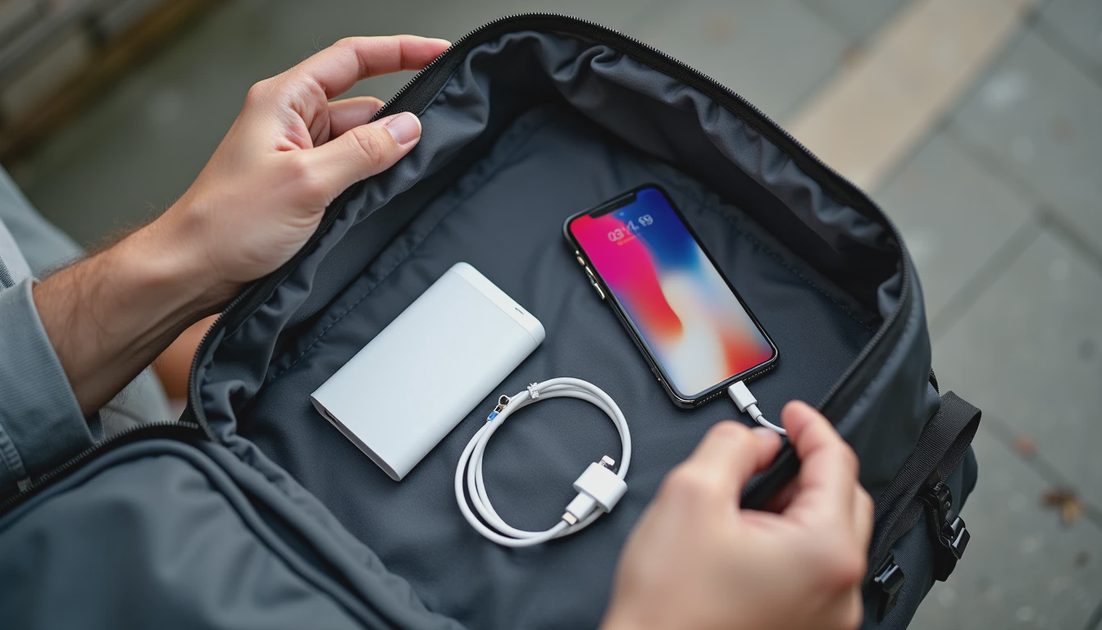
Choose a power bank for the amount of charge you need between outlets, not the largest capacity printed on a shopping page. A compact top-up pack and an all-day travel reserve solve different problems.
For iPhone 18 Pro and iPhone Duo, also decide whether you want wired charging, magnetic convenience, or both. Capacity does not establish speed, and magnetic attachment does not establish safe physical fit.
My preference for a commuter is the smallest setup that reliably covers the actual gap. This is a specification-based buying framework, not a ranking of battery packs we have tested or a promise of full recharge counts.
ON THIS PAGE
Measure the gap in your day
Choose wired or magnetic deliberately
Read capacity and output separately
Check the Duo fit
Buy the complete carrying setup
Measure the gap in your day
Look at several ordinary days before shopping. When do you need extra power, how much battery remains, and when is the next reliable outlet?
A person needing a brief afternoon top-up has a different requirement from someone navigating and taking photos through a long travel day. A spare pack that never leaves the house provides no help to either.
Write down the intended job: “enough reserve to finish the commute” is clearer than “maximum battery.” Then decide whether weight, pocket size, or shared charging matters most.
Routine | Useful priority | Easy mistake |
|---|---|---|
Short daily commute | Compact reserve and convenient cable | Buying a heavy pack you stop carrying |
Long day away | Usable capacity and recharge access | Looking only at peak output |
Two-device bag | Port allocation and total reserve | Assuming both ports keep full speed |
Phone use while charging | Secure handling and cable arrangement | Ignoring connector strain or bulk |
I would keep a few observations rather than trying to calculate a perfect pack from one unusually busy day.
Choose wired or magnetic deliberately
Wired charging gives you a direct connection and lets the pack sit separately from the phone. Check USB-C output, supported charging profiles, and the cable's capability.
A magnetic pack can remove the need for a loose phone cable during a top-up, but it adds size and weight to the device you hold. Its shape also has to clear the camera area and case.
Neither method has a universal advantage for every routine. A pack in a bag with a short cable may be convenient on a seated commute and awkward when moving between crowded spaces.
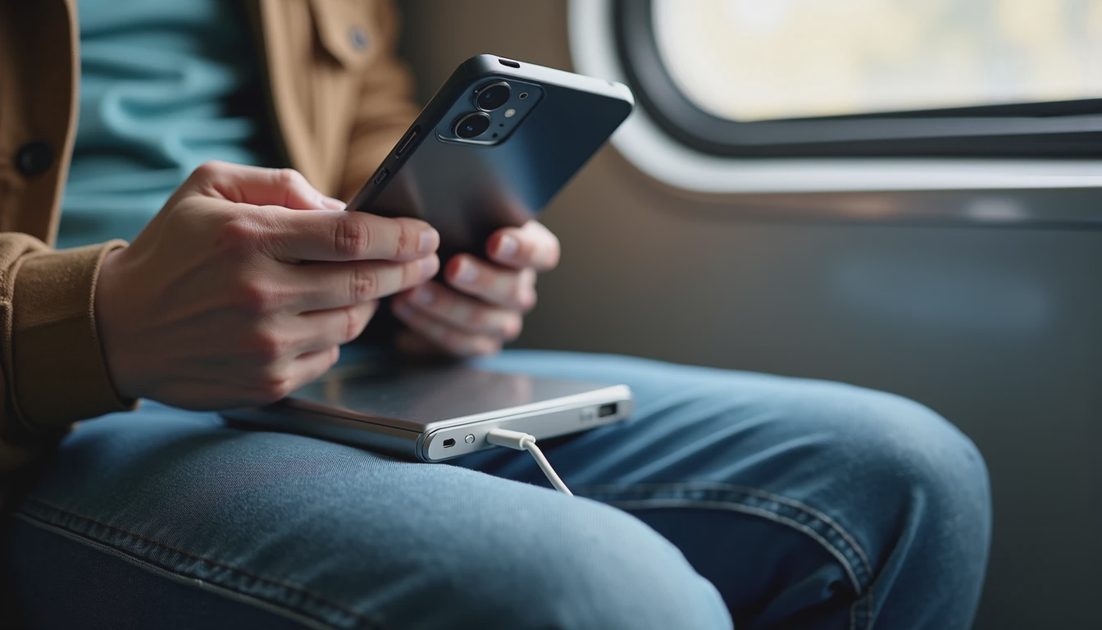
For magnetic charging, verify the stated charging standard, exact phone compatibility, and whether the attached pack remains secure in the position you use. Do not mistake “magnetic” for a charging certification.
If you only need occasional charging at a desk, a wired pack you already own may be adequate. Convenience is worth considering, but it should be a visible purchase choice rather than an assumed requirement.
Read capacity and output separately
Capacity describes stored energy. Output describes how the pack can supply a connected device. A large battery can still have a modest charging output.
Milliamp-hour figures need voltage context. A pack's cell-rating number is not the same as energy delivered to the phone after conversion losses and the phone's own activity.
Watt-hours are useful for comparing stored energy when correctly specified. Even then, you cannot divide by a phone battery figure and promise an exact number of full charges.
I would look for a rated output capacity or credible test method if the maker claims a recharge count. Ask which phone, starting state, connection, and use conditions produced the figure.
Without that evidence, treat the pack as a reserve with stated capacity, not as “three guaranteed iPhone charges.”
Match the speed you actually need
For a short emergency top-up, output can matter. Verify the phone's model-specific fast-charge requirements rather than assuming a 60W headline is enough.
A pack may advertise its highest wattage for one port only, or for recharging the pack itself rather than charging your phone. USB-C ports can be input, output, or both; identify which role the specification describes.
For iPhone 18 Pro, the latest wired benchmark has specific AVS conditions. Duo has its own published conditions and a different benchmark. Do not infer equivalent real-world times from one shared number.
If the pack cannot meet the latest benchmark but gives you sufficient reserve during a longer journey, it may still be useful. Buy speed when the time saved matters, not because “Pro” appears on the phone.
Check the Duo fit separately
A Duo-compatible magnetic pack needs more than appropriate electrical specifications. Check its footprint, camera clearance, case support, and the folded or open position the maker permits.
An attachment that looks tidy while folded can change the balance when opened. A built-in kickstand should identify the supported arrangement rather than simply appearing in a product photo.
I would avoid assuming a battery also serves as a safe stand. Test ordinary stationary fit while supporting the device, and stop if it slips, rotates, or puts pressure on the hinge.
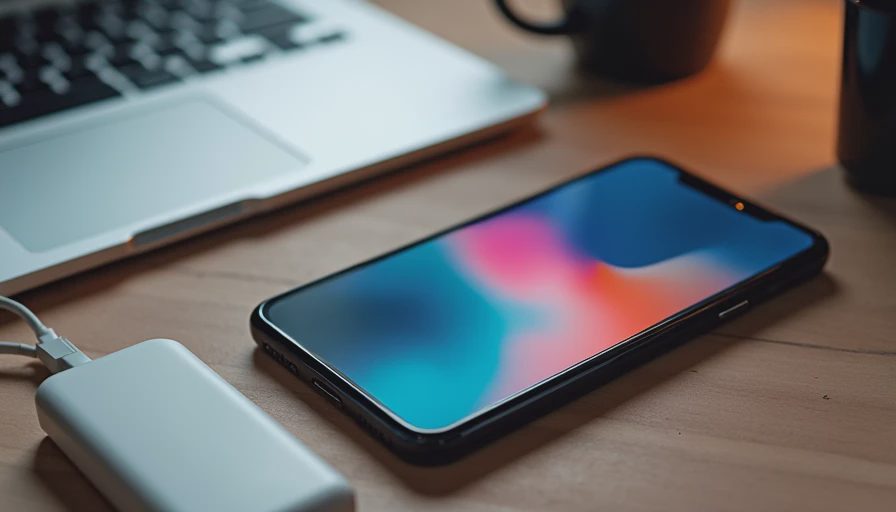
For Pro and Pro Max, check the individual model too. The larger phone's available back area does not prove the same accessory clears the smaller model.
Buy the complete carrying setup
Count the cable, pack-recharging adapter, and any necessary case as part of the purchase. Check whether a built-in cable is replaceable and what happens if it wears out.
Consider how you will recharge the pack after using it. A large reserve that takes longer than your available charging window may not be ready when the next commute begins.
If you plan to charge the pack and phone simultaneously, verify explicit support for that behavior and its limitations. Do not assume pass-through operation because both connectors can be occupied.
For air travel, check current airline and aviation rules for the pack's watt-hour rating, quantity, condition, and carrying method. Do not copy a ground-commute assumption into a flight packing decision.
Keep damaged or swollen packs out of use. A low price does not compensate for missing manufacturer identity, unclear specifications, or a product you cannot safely assess.
A purchase checklist that fits on one note
Before ordering, record:
The daily charging gap the pack must cover.
The chosen phone, case, and connection method.
Stored energy, useful capacity information, and output profiles.
Weight and dimensions you will actually carry.
Included cable, recharging requirements, and return terms.
Will a larger pack always charge faster?
No. Energy capacity and charging output are separate specifications.
Can a maker's recharge count predict my day?
Only within the tested conditions, if those are disclosed. Phone use, conversion losses, and starting levels change the result.
The right pack is not the one that wins the longest specification table. It is the one you bring, connect easily, and recharge before you need it again.